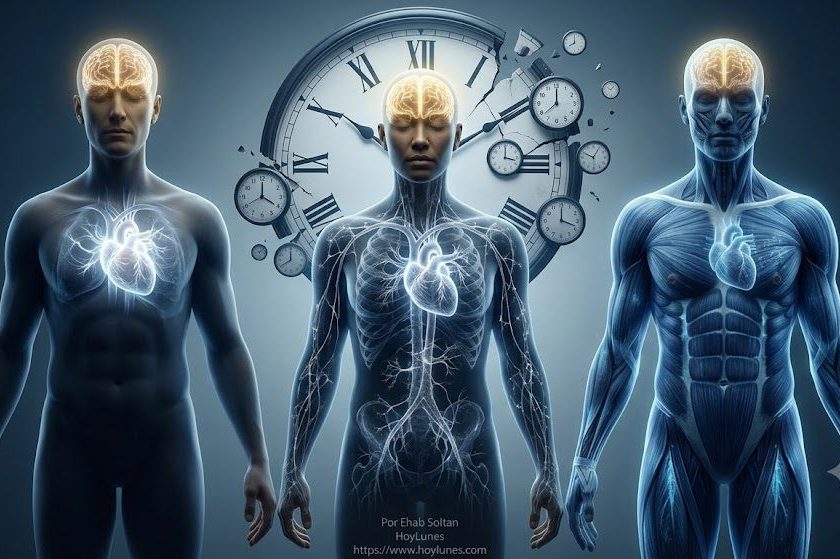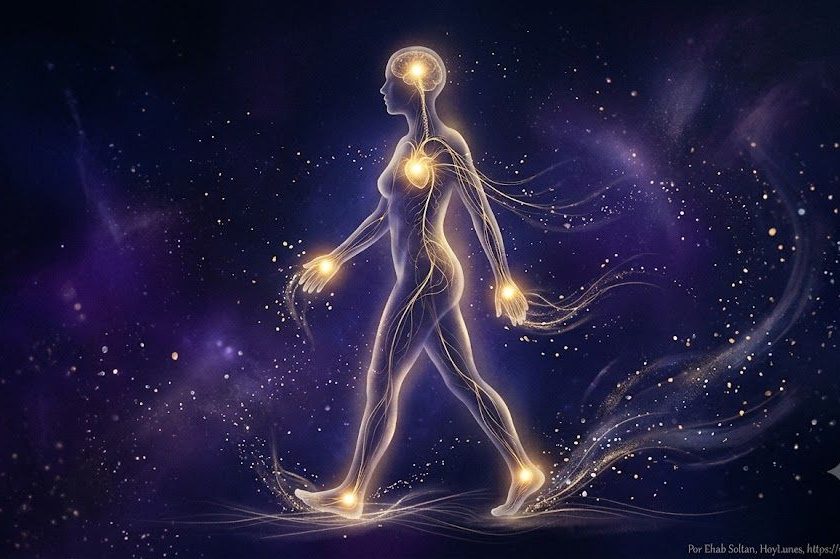
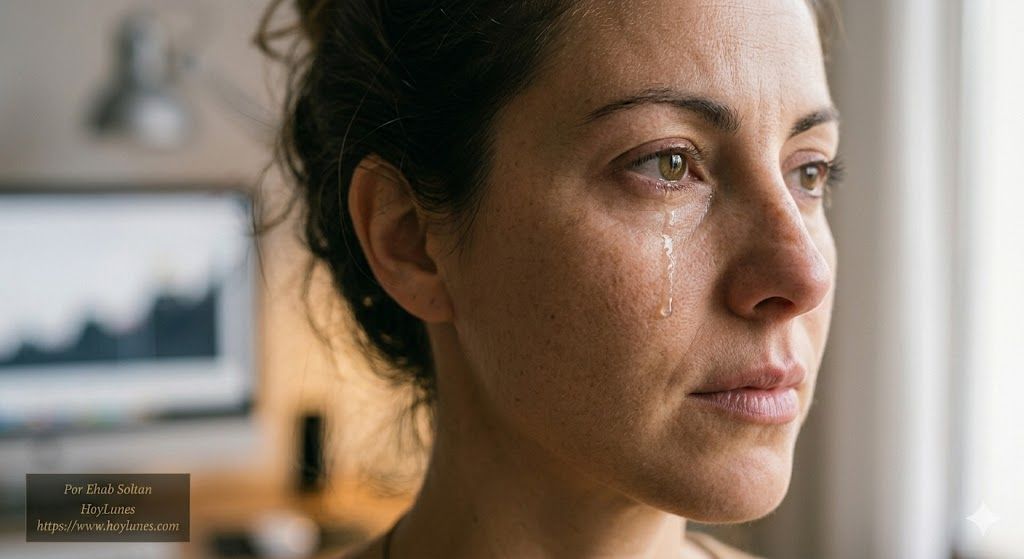
From a survival tool to a biological response that the modern environment no longer knows how to interpret. How modernity is altering the oldest and most human recalibration mechanism, and what this means for our collective health.
By Ehab Soltan
HoyLunes — There is an instant, almost imperceptible, when the world stops. It happens just before the first tear breaks the tension of the eyelid. It is not an elegant moment, nor efficient by the standards of a spreadsheet. And yet, it is a universal overflow, a visceral reaction that is activated when words simply fall short of translating internal experience.
We have spent centuries asking why we cry. It is an honest question, but perhaps too simple for the complexity of 2026. The real question, the one that confronts us and invites us to know ourselves, is far more uncomfortable:
What happens to a body—and to a civilization—when its most primal process of emotional balance is blocked or becomes dysregulated?
This article is not a self-help guide, nor a collection of motivational phrases. It is an invitation to dismantle deeply ingrained beliefs and explore crying not as a display of weakness or sadness, but as a biological and social infrastructure of high precision.
The Myth of Automatic Release
For decades, we have consumed the therapeutic and simplistic idea that “crying sets you free”. As if crying were a magical reset button or an automatic release. But if this were true, why do so many people feel the same or even worse after a crying spell?
The scientific evidence is more nuanced and uncomfortable. Relief is not intrinsic to the tear; it depends entirely on context. Emotional tears, unique to our species, are not designed primarily for the person to “feel better” in isolation. Their evolutionary function is much more powerful and subtle:
They are designed to change the response of the environment toward you.
Documented studies reveal that the presence of visible tears significantly increases observers’ willingness to offer help, fostering connection and reducing conflict. This process activates specific neural circuits linked to empathy and care in the observer.
That is: Crying is not just discharging. It is, above all, communicating a critical need without using language. And that is where the modern conflict that we are unlearning to manage begins.
The Calligraphy of Overflow: Three Paths Facing Tension
Imagine crying not as a simple cause-effect event, but as a complex mechanism with two modern deviations that define how we relate, how we recalibrate, and, ultimately, how we survive.
From affective neuroscience, this response is understood as a sequence of activation-regulation of the autonomic nervous system.
Emotional Event → Internal Activation → Crying (or Blocking)
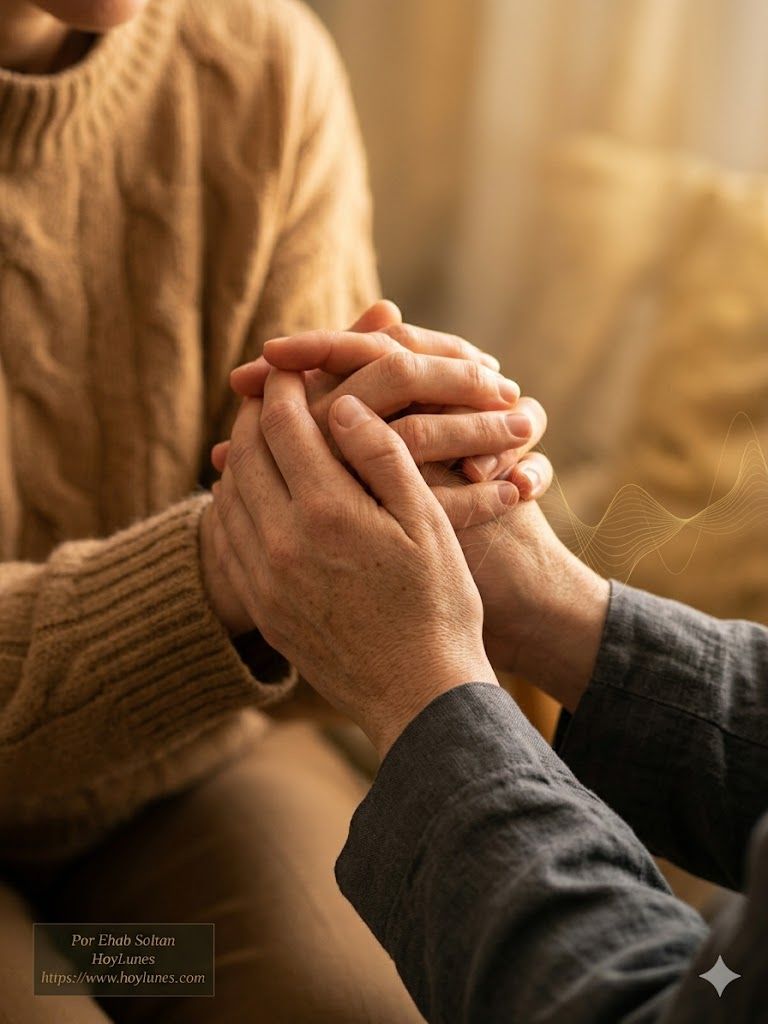
The Functional Stroke: Biological Recalibration
This is the optimal path, the one that evolution carefully designed:
A subtle yet effective activation of the parasympathetic system occurs, responsible for restoring calm to the body.
Measured hormonal changes are observed: a reduction in cortisol (the stress hormone) and an increase in oxytocin (the bonding hormone).
The result is a real sense of relief and physiological recalibrations, a closure of the emotional cycle.
The Dysfunctional Stroke: Saturated Rumination
This is the path that is saturating many bodies today:
Crying repeatedly or chronically without obtaining real relief.
Instead of connection, it fosters mental rumination and isolation.
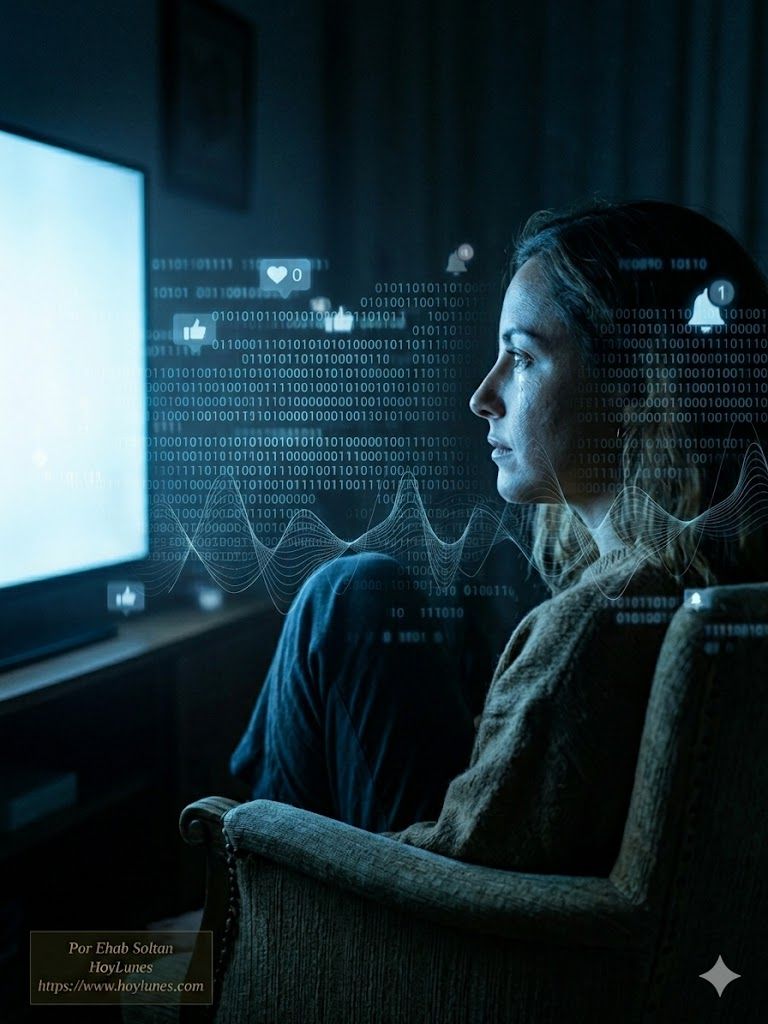
It often manifests as a “simulated release”, such as the consumption of mediated emotional stimuli (series, networks) that simulate connection without real interaction.
The result is accumulated emotional fatigue and the perpetuation of the state of alert.
The Invisible Stroke: Operational Blocking
This third path is the most interesting and least explored conceptually:
It does not mean emotional stability; often it is a **blocking of the biological signaling mechanism**.
The body continues to experience internal activation but loses its pathway for translation and social communication.
The result is an apparent functionality, but a biological disconnection and accumulated internal tension that finds no outlet.
The Structural Impact: Beyond the Emotional
The connection between crying and health is not direct, but it is structural and cumulative. Emotional tears are linked to the integration between the limbic system (our emotional brain) and the physical body, modulating the hormonal response to sustained stress.
“The critical variable is not emotional intensity, but the quality of the biological response that follows”.
But the real effect on long-term health is not in the tear itself. It is in what happens after activation:
If there is a response from the environment → balance and health.
If there is not → accumulation of tension and systemic risk.
Crying is not the solution. It is the beginning of a biological and social process of recalibration.
The Uncomfortable Hypothesis for 2026
This is where the analysis becomes strategic and invites us to uncomfortable questions that challenge our daily lives:
Are we unlearning how to manage our most basic emotions in favor of supposed efficiency? Does the work environment penalize visible vulnerability, but desperately need the connection that it facilitates? Are social networks replacing real crying with a digitalized emotional exposure that offers no real relief?
We live in a culture that, paradoxically, reduces genuine physical contact, digitalizes human interaction, and penalizes visible vulnerability. The result is strategic and concerning:
We are creating environments where the human body feels… but cannot correctly activate its basic social signals of recalibration.
This generates two emerging profiles that impact our health and society:
The One Who No Longer Cries: Functional, productive, but biologically disconnected.
The One Who Cries Without Control (Saturated): Exposed, dependent on responses that do not arrive, exhausted.
Both are adaptations to the same underlying problem: an environment that no longer responds adequately to the human biological language.
We are not ceasing to feel; we are losing the mechanisms to process what we feel.
What This Means for Society (and the Market)
Here is the layer of interest to companies, platforms, and strategic leaders. From mental health platforms to audiovisual content that designs guided emotional experiences. If we understand crying as a critical response of need, a social tool of connection, and an indirect physiological regulator, then a clear and strategic opportunity arises: To redesign environments (workplace, educational, digital, and health) where that response returns to make sense and gets an answer.
This directly affects sectors such as corporate mental health, emotional education, leadership development, and audiovisual culture. Organizations that understand this will not compete only for content or products. They will compete for something much deeper and more valuable: The ability to return to the human body a context where its biological responses work again to achieve balance.
It Is Not Crying That Matters
Perhaps the conceptual error was never asking why we cry. The relevant question, the one that defines our humanity in this decade, is another:
Who responds when we do?
Because a body that receives no response does not cease to feel; it learns to be silent.
Crying, by itself, resolves nothing. It is only a door that the body opens. And what happens on the other side—silence, genuine understanding, or discomfort—is what defines whether that organism recalibrates physiologically… or breaks a little more in silence.
Sources and Scientific Reference Lines
This analysis is supported by consolidated lines of research on human behavior and neuroscience:
Research on the typology of tears and their impact on ocular and systemic physiology [healthline.com]
American Psychological Association.
Frontiers in Psychology.
Analysis of the neurobiology of human crying and its relation to the autonomic nervous system (NIH / PMC).
Ophthalmological explanations of hormonal regulation and the crying process [prevention.com].
Studies on the chemical composition and social function of emotional tears [forbes.com].
#HumanHealth #Neuroscience #Emotions #HumanBehavior #MentalHealth #Biology #HoyLunes #EhabSoltan #Society #HealthInnovation #Strategy #EmotionalRegulation